

The Significance of Sleep
The Significance of Sleep
Welcome to the NourishMind knowledge module! In this article, we will explore the multifaceted significance of sleep, focusing on its critical roles in cognitive function, emotional regulation, physical health, energy restoration, and circadian rhythms.
Understanding these aspects can help us appreciate the importance of prioritising sleep for overall well-being.

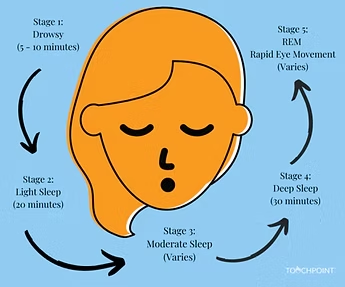
Sleep is essential for cognitive processes, particularly memory consolidation and problem-solving. During sleep, especially in the Rapid Eye Movement(REM) stage, the brain processes and integrates information acquired throughout the day, enhancing our ability to learn and retain knowledge (Wagner et al., 2004). The amygdala, which is involved in emotional processing, interacts with other brain regions during sleep to help consolidate emotional memories, further enhancing learning and memory retention. This interaction is crucial because it allows us to not only remember facts but also to understand the emotional context of those memories, which is vital for effective decision-making and social interactions. Research indicates that adequate sleep improves attention, decision-making, and creativity, making it vital for academic and professional success.
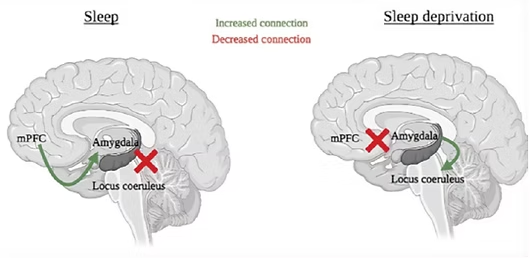
The relationship between sleep and emotional health is profound. Insufficient sleep can leadto increased emotional reactivity and difficulty managing stress, which may contribute to mood disorders such as anxiety and depression (Yoo et al., 2007). Sleep helps regulate emotions by allowing the brain to process emotional experiences, thereby promoting
resilience and emotional stability. This connection highlights the necessity of good sleep hygiene for mental health.
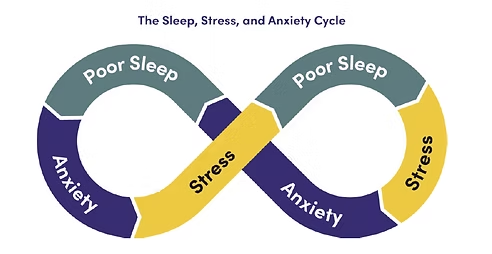
Sleep plays a crucial role in maintaining physical health. It supports various physiological processes, including immune function, tissue repair, and metabolic regulation. For example, during deep sleep, the body releases growth hormone, which is vital for recovery and growth (Van Cauter et al., 2000). The hypothalamus, which regulates many bodily functions, including hunger and stress responses, also plays a role in sleep regulation. It helps maintain homeostasis by responding to the body’s needs, such as signalling when to eat or sleep. Chronic sleep deprivation has been linked to numerous health issues, including obesity, diabetes, and cardiovascular diseases, underscoring the importance of sleep for overall health.

Sleep is also a critical period for energy restoration. During sleep, the body replenishes energy reserves, particularly in the form of adenosine triphosphate (ATP), which is essential for cellular functions (Horne, 2013). A good night’s sleep enhances our energy levels, allowing us to perform daily tasks effectively. Conversely, sleep deprivation can lead to
fatigue, decreased alertness, and impaired cognitive function, affecting our productivity and quality of life.
Circadian rhythms, the body’s internal clock, play a significant role in regulating sleep patterns. These rhythms are influenced by environmental cues, such as light and darkness, and govern various bodily functions, including hormone release and metabolism (Hastings et al., 2003). The hypothalamus is crucial in maintaining these circadian rhythms, as it
responds to light signals and helps synchronise our sleep-wake cycles. Disruptions to circadian rhythms, such as those caused by shift work or irregular sleep schedules, can negatively impact sleep quality and overall health.
Sleep is a multifaceted process that is essential for cognitive function, emotional regulation, physical health, energy restoration, and the regulation of circadian rhythms. The amygdala and hypothalamus play significant roles in these processes, influencing how we experience and regulate emotions, as well as how our bodies maintain homeostasis during sleep. By recognizing the significance of sleep in these areas, we can take proactive steps to improve
our sleep quality and, consequently, our overall health and well-being. Prioritising sleep is not just about rest; it is about nourishing our minds and bodies for a healthier, more vibrant life.

References
● Hastings, M. H., Reddy, A. B., & Maywood, E. S. (2003). A clockwork web: circadian timing in brain and periphery. Nature Reviews Neuroscience, 4(8), 649-661.
● Horne, J. A. (2013). The meaning of sleep. Sleep Medicine Reviews, 17(1), 1-2.
● Van Cauter, E., Leproult, R., & Plat, L. (2000). Age-related changes in slow wave sleep and REM sleep and relationship with growth hormone and cortisol levels. Journal of Clinical Endocrinology & Metabolism, 85(8), 2687-2692.
● Wagner, U., Gais, S., & Born, J. (2004). Sleep inspires insight. Nature, 427(6972), 352-355.
● Yoo, S. S., Gujar, N., Hu, P., Jolesz, F. A., & Walker, M. P. (2007). The human emotional brain without sleep—a prefrontal amygdala disconnect. Journal of Cognitive Neuroscience, 19(3), 350-356.